
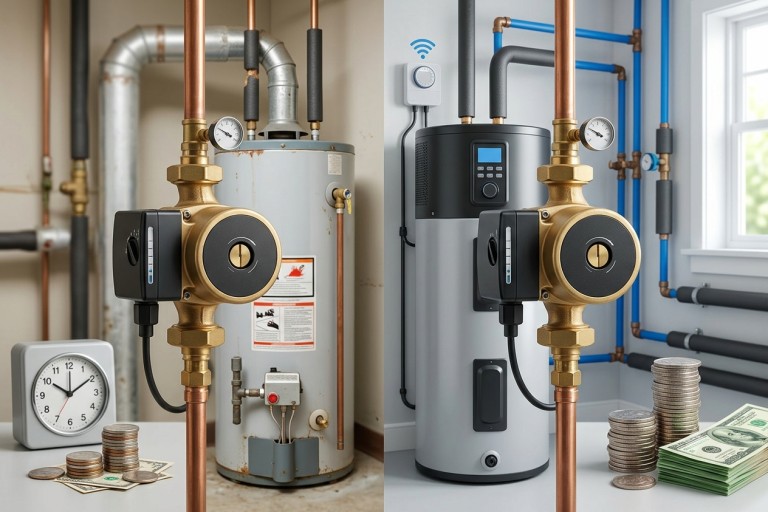
A recirculation pump brings hot water to your faucet faster and reduces water waste. Two pumps that look identical can still pay for themselves on very different timelines, and the reasons sit in your home rather than on the box. Herdman Plumbing Heating & Cooling serves homeowners and businesses throughout Kitsap County and Western Washington, and we know a good hot water decision starts with the whole system. This guide covers what shapes payback so you can decide with confidence.
What “Payback Period” Actually Means for a Recirculation Pump
Payback period is the time it takes for savings to cover your upfront cost. The water heater recirculation pump payback period depends on what actually happens in your home once the pump is running.
Where The Savings Come From:
- Less water wasted while you wait for heat at the faucet
- Less energy spent heating water that never gets used
- Hot water that reaches the fixture sooner
What Works Against Them:
- Electricity the pump uses while it runs
- Heat that escapes from pipes as water circulates
The balance between these two lists sets your recirculating pump ROI. Hot water recirculation pump cost savings become real only when the first list clearly outweighs the second.
The Hidden Variable: Pump Type (Timer vs. On-Demand vs. Smart/Sensor-Based)
Each pump type uses energy differently, so this choice affects payback more than most buyers expect.
- Timer pumps follow a fixed schedule, whether or not anyone needs hot water.
- On-demand Pumps only turn on when you press a button or a sensor tells them to pump hot water.
- Install smart pumps and forget about it. It picks up your household’s hot water schedule over time and adjusts to match.
| Pump Type | Best Fit | Main Limitation |
| Timer | Predictable daily routines | Runs during empty hours |
| On-demand | Irregular schedules | Needs a trigger each time |
| Smart/sensor | Busy, changing households | More setup and settings |
The on-demand vs. timer recirculation pump question usually comes down to your schedule. Steady routines tend to suit a timer. Irregular days tend to suit an on-demand unit, which avoids circulating water when nobody is home.
Many buyers search for the best hot water recirculation pump for savings. The right answer is the pump that fits your routine and pipe layout, and a long feature list doesn’t change that. Weigh the on-demand vs. timer recirculation pump options against your own habits first.
Standby Heat Loss and Pipe Insulation Change the Whole Equation
Standby heat loss is heat that leaves the pipes while hot water circulates. Your water heater then has to make up the difference. Recirculation pump standby heat loss is more noticeable in damp, cool Puget Sound weather, especially along pipes that run through unheated areas. Addressing it early protects the savings the pump is supposed to deliver.
Insulated vs. Uninsulated Pipe Runs
Insulation decides how much heat stays in the water.
- Insulated pipes hold heat longer, so the pump runs less often
- Bare pipes give up heat quickly, so the water heater works harder
- Recirculation pump standby heat loss grows when pipes are exposed
- Damaged or missing insulation deserves attention before you judge any pump
How Distance From Water Heater To Fixtures Affects Recovery Time
The distance between your water heater and your fixtures sets how long you wait for hot water.
- Short runs gain little, because hot water already arrives quickly
- Long runs gain the most, because the wait is where water gets wasted
- Older layouts with winding pipe paths tend to lose more heat along the way
Energy Source and Local Utility Rates
Your water heater determines how much wasted heat matters. Herdman Plumbing Heating & Cooling handles water heater installation and repair for gas, electric, and propane units, including tank and tankless models and various capacities. That range lets us look at your whole system, not just one part, which keeps our recommendations practical.
Electric vs. Gas Water Heaters And How That Shifts Savings
Hot water recirculation pump energy cost combines what you pay to heat water with what the pump itself uses.
- Electric units tie heating costs to your electric rate
- Gas units tie heating costs to your natural gas rate
- Propane units tie heating costs to your propane delivery rate
- Tank and tankless models each respond differently to circulating water
Raise these points during any water heater installation so the pump suits the unit it serves.
Why The Same Pump Pays Back Faster In High-Rate Regions
Where utility rates run higher, each bit of saved energy or water is worth more, so the same pump earns its return sooner. Where rates are modest, payback stretches out. Water and sewer charges belong in this picture too, because less wasted water lowers those bills. Your statements show which situation applies, and you should measure your hot water recirculation pump energy cost against them.
How to Estimate Your Own Payback Period Before Buying
A reliable estimate starts with accurate property details. Gather the items below before you decide. Treat recirculating pump ROI as a result specific to your property, since pipe layout, habits, and equipment differ from one home to the next.
Data You Need To Gather (rates, usage, pipe length, insulation)
- Utility rates: electric, gas, or propane rates, plus water and sewer charges
- Hot water usage: when your household uses hot water and how long the wait feels
- Pipe length: the distance from the water heater to the farthest fixture
- Insulation condition: whether hot water pipes are covered, damaged, or bare
- Water heater type: tank or tankless, and the fuel it uses
Here Is How To Read The Results:
- Short waits, insulated pipes, and modest rates point to a longer payback
- Long waits, heavy usage, and higher rates point to a shorter payback
- A pump that does not clearly earn its keep is worth a second look before you buy
This gives you the water heater recirculation pump payback period for your own household. It also shows whether hot water recirculation pump cost savings are realistic for your layout, and it helps you identify the best hot water recirculation pump for savings in your home.
Get the Right Hot Water Plan from Herdman Plumbing Heating & Cooling
A recirculation pump is one part of a larger hot water system. The strongest results come from reviewing the water heater, the piping, and your usage together. Our team accounts for each property’s details across our service area.
- Silverdale: homes near the Kitsap Mall corridor and Dyes Inlet often need units sized for busy households.
- Poulsbo: older homes near downtown and Liberty Bay sometimes need updated connections alongside a new unit.
- Bainbridge Island: coastal humidity and salt air near Eagle Harbor call for materials built to handle that exposure.
- Bremerton: many properties still carry original plumbing from decades past, and our team accounts for that older infrastructure.
- Port Orchard: homes from Bay Street to McCormick Woods each need a unit matched to the household it serves.
How Our Simple Process Works
Getting started with Herdman Plumbing Heating & Cooling is straightforward. Call our office for a free estimate, and we will schedule your repair or installation. Our team then shows up and solves your issue.
Call Herdman Plumbing Heating & Cooling or request an appointment online to start planning your water heater installation.