
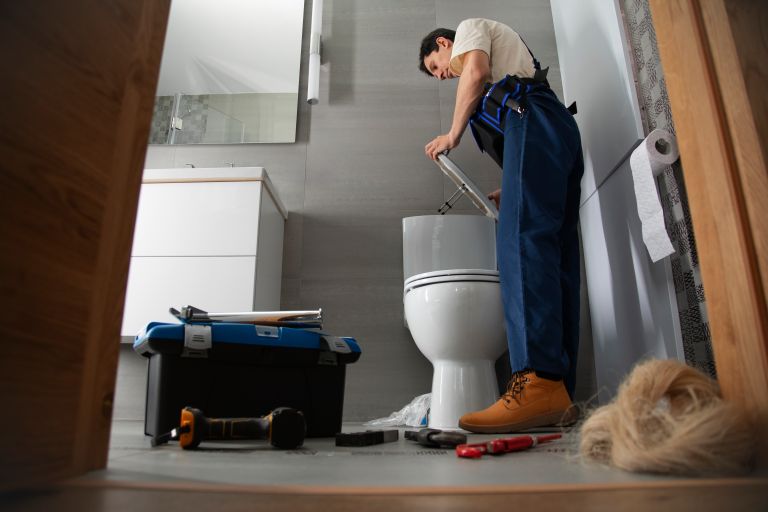
Ask most homeowners what a plumbing repair emergency looks like, and they will describe a flooded kitchen or a stained ceiling. Very few will mention a toilet that refills by itself at two in the morning. Yet that small, steady sound is often the more expensive problem over time, because nothing about it feels urgent enough to fix.
For households across Silverdale, Poulsbo, Bainbridge Island, Bremerton, and Port Orchard, this guide explains how a running toilet quietly drains money, how to confirm it in about ten minutes, and when to call a professional plumber.
What Actually Happens When a Toilet Runs
After every flush, the tank refills and the fill valve shuts off the water supply. A running toilet is what happens when that cycle never fully ends. In most homes, the cause is a toilet flapper leak, where a worn rubber seal lets tank water slip into the bowl, and the fill valve keeps topping the tank back up.
| Common cause | What you will notice |
| Worn or warped flapper | A faint trickle or an occasional refill with no flush |
| Fill valve that will not shut off | A steady hiss and a tank that never settles |
| Chain that is too tight or too loose | A flapper that cannot close fully |
| Float set too high | Water spilling continuously into the overflow tube |
| Mineral buildup | A seal that no longer sits flush |
Quick tip: If your tank refills when nobody has flushed, treat it as one of the first signs of a running toilet rather than a harmless habit.
How Much Water a Running Toilet Really Wastes
Homeowners often ask how much water does a running toilet wastes, and the honest answer depends on the size of the leak. The U.S. Environmental Protection Agency reports that the average household loses nearly 10,000 gallons of water each year to leaks, and worn toilet flappers are a common source (EPA WaterSense). That figure covers all kinds of household leaks, so it works as a benchmark rather than a promise for any single toilet.
Gallons Per Day vs Gallons Per Month
The easiest way to size up water waste from running toilet problems is by how long it runs. The same slow leak costs very little over an afternoon and a great deal over a season.
| How long it runs | What it suggests |
| A minute or two after a flush | A normal refill |
| Several hours a day | Worth checking soon |
| Repeatedly overnight | Water is escaping while the toilet sits idle |
| Weeks without repair | Waste is stacking up unnoticed |
| Months | The running toilet cost becomes visible on your bill |
The EPA also notes that about 10 percent of homes have leaks that waste 90 gallons or more per day, showing how quickly an ignored leak can grow.
Running Toilet vs Burst Pipe: A Cost Comparison
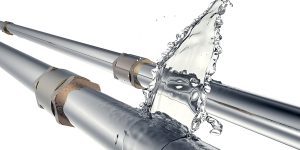
The running toilet vs burst pipe question is less about which is worse in a single hour and more about how each one behaves over time.
| Factor | Running toilet | Burst pipe |
| How it starts | Gradually | Suddenly |
| Visibility | Easy to overlook | Hard to miss |
| Type of loss | Steady, hidden water waste | Rapid flooding and property damage |
| Typical response time | Days to months | Minutes to hours |
| Main risk | Accumulated utility charges | Immediate structural damage |
A burst pipe usually does more harm on day one, but a running toilet narrows the gap because nobody stops it.
How It Shows Up on Your Water Bill
A toilet leak water bill increase rarely arrives as a single shock. It shows up as a gradual climb in your running toilet water bill with no change in watering, guests, or laundry. Compare the last few billing periods, and if usage has risen without a clear reason, check the toilets first. The EPA estimates that fixing easily corrected household leaks can save about 10 percent on water bills (EPA).
Why a Running Toilet Is More Dangerous Than It Seems
The expense is only part of the concern, because a toilet that never stops is telling you that a component has failed.
Burst Pipes Get Fixed Fast: Running Toilets Don’t
A burst pipe forces a decision within minutes, while a running toilet merely asks for patience, and that patience quietly turns “this weekend” into “next month.” Meanwhile, the worn part keeps wearing, and the leak keeps growing.
If a toilet refills without being flushed, treat it as a plumbing problem rather than a quirk.
The “Silent Leak” Problem
A silent toilet leak leaves no puddle or stain because the water simply travels from the tank into the bowl and down the drain. Night is the best time to catch it, since a quiet house makes a faint hiss or a stray refill easy to hear. The EPA recommends checking toilets for silent leaks with a simple food-coloring test, described below.
Long-Term Damage: Mold, Foundation, and Fixture Wear
A tank-to-bowl leak mostly wastes water. Damage to the surrounding structure usually comes from a different kind of leak, such as one at the supply line, the tank, or the base, and the Pacific Northwest’s damp climate gives that moisture little chance to dry out. Left alone, it can lead to:
- Softened flooring or subfloor
- Damp cabinetry and trim
- Lingering odors
- Conditions that support mold growth
Foundation damage from a running toilet is unlikely, but unchecked moisture around the base is a legitimate concern.
How to Check If Your Toilet Is Running
You do not need to take anything apart. Make sure nobody is using the bathroom, listen for a few minutes, then lift the tank lid and watch the water level. Any movement without a flush deserves a closer look by an experienced plumber.
The Food Coloring / Dye Tablet Test
This is the most dependable way to learn how to test a toilet for leaks at home:
- Remove the tank lid.
- Add a few drops of food coloring, or drop in a dye tablet.
- Do not flush.
- Wait about 10 minutes.
- Check the bowl for color.
- If color reaches the bowl, water is leaking from the tank. The EPA recommends this method (EPA), and a quick flush afterward keeps the dye from lingering.
Listening and Visual Inspection Tips
Look for several clues instead of relying on one symptom.
| Listen for | Look for |
| Repeated refilling | Ripples across the bowl surface |
| A continuous hiss | A water level that keeps changing |
| Intermittent trickling | A flapper that does not seat evenly |
| Water moving when nobody is nearby | Moisture around the base or supply line |
Together, these clues show whether the issue is limited to a tank part or calls for a broader plumbing repair.
When to Call a Plumber
Anyone searching for how to fix a running toilet will usually begin with the chain or the flapper, and those small adjustments do solve plenty of cases. The harder part is tracing the real cause when a brand-new flapper still leaves the tank refilling on its own.
If that sounds familiar, a phone call is usually justified, especially in situations like these:
- Your toilet running constantly, even after you have adjusted the chain and the float
- A dye test that sends color into the bowl within a few minutes
- Dampness or pooling water near the base of the toilet
- A water bill that keeps climbing although nothing has changed in how the household uses water
- A toilet that goes back to the same problem a few weeks after it was repaired
Experienced plumbers can trace the cause quickly instead of replacing parts by trial and error. Herdman Plumbing Heating & Cooling offers residential and commercial plumbing services, including plumbing repair services.
The running toilet repair cost depends on a few factors rather than a fixed number:
| Factor | Why it matters |
| Which part has failed | A flapper, fill valve, or float each involves different work. |
| Age of the fixture | Older toilets often have several worn parts at once |
| Access to shutoffs and supply lines | Easier access can shorten the visit |
| Repeat problems | A leak that returns may point to a deeper cause |
How to Prevent Future Running Toilets
A little routine attention goes a long way:
- Listen occasionally: Notice whether the toilet refills without a flush.
- Review your bills: Unexplained increases can point to hidden leaks.
- Inspect older parts: Rubber and plastic wear out, and established neighborhoods such as Manette in Bremerton, Winslow on Bainbridge Island, and Old Town Poulsbo are more likely to have aging fixtures.
- Act on intermittent running: An occasional refill is rarely harmless.
- Check around the base: Moisture outside the bowl signals a different leak.
The EPA estimates that household leaks waste nearly 1 trillion gallons of water across the country every year (EPA WaterSense). One toilet looks small beside that number, yet millions of small leaks are how it adds up.
When the Quiet Drip Deserves Your Attention
A running toilet never announces itself the way a burst pipe does, which is exactly why it deserves a few minutes of attention. A quiet listen, a quick dye test, and a look at recent bills can catch a leak long before it becomes routine.
Homeowners and businesses in Silverdale, Poulsbo, Bainbridge Island, Bremerton, and Port Orchard can turn to Herdman Plumbing Heating & Cooling for residential and commercial plumbing repair services across Western Washington.
If your toilet will not stop running, contact our plumbers at 360-698-4147 to request service before a small leak becomes a steady expense.