
Stained fixtures, a metallic taste, or water that runs orange for a moment can leave you asking what’s in my water and whether your plumbing is at risk. The answer depends on whether you are dealing with hardness, iron, or both, and each one calls for a different response.
This guide explains hard water vs. iron water, helps you recognize the signs at home, and shows you when Herdman Plumbing Heating & Cooling is the right team to call.
Why Your Water Quality Affects Your Pipes
Every fixture, pipe, and appliance in your property depends on the water passing through it. Calcium and magnesium cause hardness, and iron causes stains, odor, and discoloration. Both build up inside your plumbing over time and reduce how well your system works.
Kitsap County adds its own conditions. The Pacific Northwest rain keeps the ground saturated for much of the year, and homes that rely on private wells often face well water iron problems. In Silverdale, older lines near the Kitsap Mall corridor and Dyes Inlet can also contribute to rust as aging metal pipes wear down.
Our plumbing repair technicians diagnose these situations properly rather than guessing, so you know exactly what is happening inside your lines.
Common Signs You Have Hard Water
Hard water symptoms usually develop gradually, which makes them easy to overlook in daily routines. These are the signs worth checking at home.
White or Chalky Buildup on Fixtures
A white crust around faucets, showerheads, and drains is scale, and it forms when hard water dries and leaves minerals behind. Because the same deposits build up inside your lines, this is one of the clearest signs of hard water in pipes.
Soap That Won’t Lather and Spotty Dishes
Minerals interfere with soap, which leads to weak lather, a cloudy film on glassware, and a ring around the tub. Extra detergent doesn’t fix the underlying cause.
Dry Skin and Dull Hair After Showering
With hard water, soap residue remains on the skin/hair. After a good rinse, many people will find skin tightness and flat, dull hair.
Reduced Water Pressure Over Time
Scale narrows pipe openings and clogs aerators, so water flow drops gradually over the months. Persistent pressure loss is a good reason to schedule plumbing repair before the restriction worsens.
Common Signs of Iron Staining
Iron staining in water follows a recognizable pattern, so look for these indicators around your home.
Reddish-Brown or Orange Stains in Sinks and Tubs
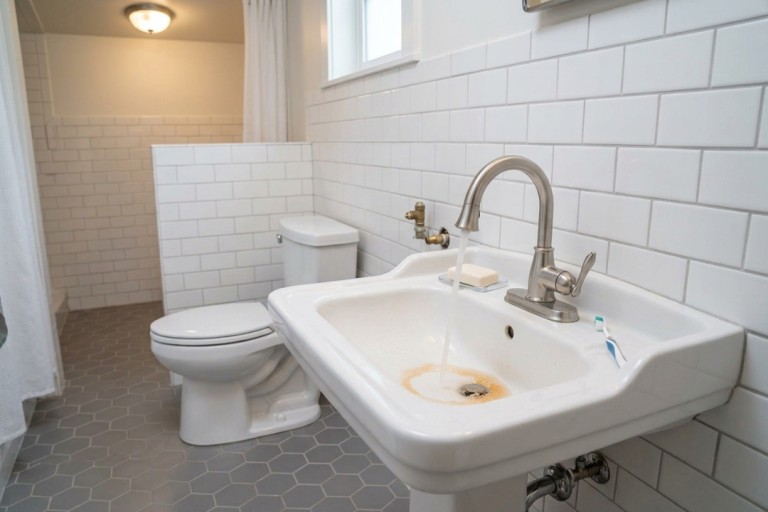
Reddish-brown stains in sink basins, tubs, and toilet bowls are the most common indicator of iron. They collect near drains and dripping faucets and become harder to remove the longer they remain. Many property owners ask how to remove iron stains from water fixtures. Cleaners lift surface marks, but the stains return until you address the source.
Metallic Taste or Smell in Your Water
A metallic smell in tap water usually points to dissolved iron. The taste is often compared to a coin and tends to be stronger in water that has sat in the pipes overnight.
Discolored Laundry After Washing
White clothing and towels can develop yellow or rust-colored spots. Bleach can set the iron into the fabric, which makes the staining worse.
Rust-Colored Water When You First Turn On the Tap
Rust-colored water from faucet lines that clears after a short run often points to iron in the supply or corroding pipes. When every fixture shows it, the cause is likely in the main supply. If it appears at a particular fixture, inspect the nearby section of pipe.
How to Test and Identify What’s in Your Water
Testing replaces guesswork with facts and points you toward the correct solution.
DIY Water Test Kits
Hardware-store test kits use strips or drops to measure mineral levels and give a quick reading. Collect your sample from a cold tap you haven’t used recently, and follow the label closely. Home water testing for hardness and iron shows whether hardness, iron, or both are present.
When to Call for a Professional Water Analysis
Arrange a laboratory analysis when kit results are unclear, when you rely on a private well, or when symptoms keep coming back. Professional water testing for hardness and iron produces a detailed report that answers what’s in my water with specifics, not assumptions. That report also shows whether a water softener vs. an iron filter is the better match for your property.
Use this table to compare hard water vs. iron water at a glance.
| What You Notice | Hard Water | Iron Water |
| Marks on fixtures | White, chalky scale | Orange or reddish-brown stains |
| Soap performance | Weak lather, cloudy film | Little effect on lather |
| Taste and smell | Usually normal | Metallic taste or smell |
| Laundry | Stiff and dull | Yellow or rusty spots |
| Water from the tap | Clear | Can look rust-colored |
How Hard Water and Iron Damage Plumbing
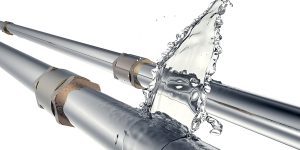
Hard water damage to plumbing builds quietly, and the signs of hard water in pipes often go unnoticed until flow drops or a fitting fails. Iron adds corrosion on top of that. Common effects include:
- Restricted Supply Lines. Scale narrows pipes and strains fittings.
- Your water heater works overtime. Scale collects on heating elements and tank walls, so both tank and tankless units burn more energy to do the same job and tend to give out earlier.
- Faucets and Valves Get Stiff. Mineral crust builds up around aerators and inside valves, which means weak flow, sticking handles, and parts that need replacing sooner.
- Older pipes take a beating. Iron and rust eat at aging metal lines from the inside, leaving them thinner, rougher, and more likely to leak.
- Grit Collects in Fixtures. Sediment settles in the toilet tanks, faucet bases, and drains, where it can cause clogs, stains, and running toilets.
Address hard water damage early so the repair stays small and the rest of your plumbing stays protected.
When to Call a Plumber vs. a Water Treatment Specialist
Plumbing and water treatment are separate specialties, and choosing the right one saves time and prevents repeat visits.
Call Your Plumber When
- Water pressure keeps dropping.
- Leaks, corroded fittings, or worn fixtures appear
- Your water heater struggles or runs noisily
- Rust colored water from faucet lines traces back to aging pipes
- Iron staining in water appears alongside slow drains or damaged fixtures
Call A Water Treatment Specialist When You Need To
- Lower the mineral content of your supply
- Choose between a water softener vs. an iron filter
- Address well water iron problems at the source
- Learn how to remove iron stains from water permanently
Herdman Plumbing Heating & Cooling handles plumbing repair, water heaters, clogged drains, and sewer repair for residential and commercial properties. Our plumbers will tell you directly whether your issue belongs with a treatment specialist or with us.
Straight Answers and Reliable Plumbing Across Kitsap County
Wet winters and damp springs keep plumbing working hard across the region, and mineral buildup should never be left to worsen. Homeowners and businesses in Silverdale, Poulsbo, Bainbridge Island, Bremerton, and Port Orchard depend on Herdman Plumbing Heating & Cooling for quality workmanship and reliable service. If you notice hard water symptoms, reddish-brown stains in sink basins, or a metallic smell in your tap water, an early diagnosis protects your pipes and your property.
Our process is simple. You call for a free estimate; we schedule the repair, our team shows up, and we solve your issue. Financing is also available, so ask our office for details. Call Herdman Plumbing Heating & Cooling or request an appointment online today.