
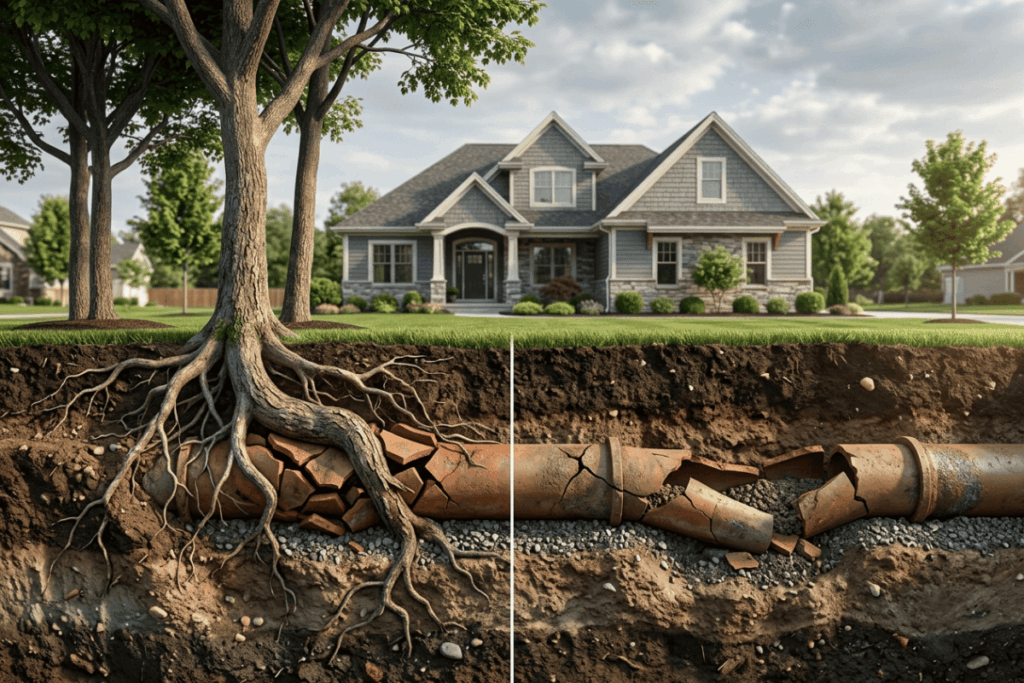
Picture this. You flush the toilet, and a gurgling sound comes from the shower drain. A few minutes later, water starts backing up into the basement floor drain. Most homeowners assume it’s a simple clog, but not every sewer backup has the same cause. Treating the wrong problem often leads to repeat backups, added expense, and more damage underground than you started with.
Across Kitsap County, in communities like Silverdale, Bremerton, Port Orchard, Poulsbo, Bainbridge Island, and Belfair, mature trees and aging underground pipes are a common pairing. Figuring out whether tree roots in sewer line systems or a broken sewer pipe is behind the problem takes more than a guess. It takes a real look inside the line with the right equipment.
The EPA has identified aging wastewater infrastructure as an ongoing nationwide investment priority, underscoring how underground sewer systems deteriorate over time. The USDA also notes that tree roots naturally chase moisture and nutrients, which makes buried utility lines an easy target once even a hairline crack forms. These two facts tend to overlap, and that overlap is exactly why pinpointing the real cause of a backup matters.
Here’s how to tell root intrusion apart from structural pipe damage, the signs worth watching for, and why getting the diagnosis right the first time saves money down the road.
Why Sewer Backups Often Get Misdiagnosed
A lot of homeowners assume every backup traces back to a clogged drain. Grease, paper products, and general debris do cause plenty of blockages, but issues involving the main line are often more layered than that.
Several problems can look nearly identical on the surface:
- Root intrusion
- A cracked or collapsed sewer line
- Pipe separation
- Soil movement
- Heavy buildup inside older pipes
- More than one obstruction is happening at once
Without eyes inside the pipe, there’s no reliable way to know which one you’re actually dealing with.
The symptoms rarely tell the full story. Slow drains, bubbling toilets, indoor sewer odors, and standing water near outdoor cleanouts all point to a sewer line blockage, but none explains its cause.
| Symptom | Likely Cause |
| Multiple slow drains | Root intrusion, pipe collapse, or grease buildup |
| Gurgling toilets | Main sewer line restriction |
| Backup after doing laundry | Partial sewer obstruction |
| Wet patches in the yard | Pipe leak, break, or root damage |
| Backups that keep coming back | Structural damage or aggressive root growth |
Each of these calls for a different fix, which is exactly why guessing gets expensive. Clearing roots without repairing the crack that lets them in means they’ll grow back. Replacing a section of pipe when the real issue is root intrusion elsewhere doesn’t solve anything either. This is why plumbers increasingly lean on sewer camera inspection before recommending any repair. Modern camera equipment lets a technician see the entire line, pinpoint the exact problem, and confirm whether it’s roots, cracks, a collapsed section, or debris. Herdman Plumbing Heating & Cooling uses high-resolution video inspections as part of its diagnostic process before recommending any repair.
Quick tip: If your home keeps backing up shortly after a clog gets cleared, the real problem is usually sitting deeper in the line.
How Tree Roots Invade Sewer Lines
Trees are good at finding water, and underground sewer lines happen to be a reliable source. Contrary to what most people assume, roots rarely crush a healthy pipe outright. They take advantage of weaknesses that already exist, such as:
- Tiny cracks
- Loose joints
- Aging clay pipe connections
- Small pipe separations
- Corroded or damaged seals
Once a root finds its way in, it keeps growing. Over time, these masses trap toilet paper, grease, soap residue, and other debris. A hair-thin root can cause a serious clog in a sewer line faster than most people expect.
Older neighborhoods around Bremerton, Silverdale, Port Orchard, Poulsbo, Bainbridge Island, and Belfair tend to see more of this simply because mature landscaping and decades-old pipe materials go hand in hand. That doesn’t mean every older line is failing, but it does mean routine sewer line inspection becomes more valuable as a system ages. The EPA has noted that wastewater infrastructure across the country continues to age, which is part of why proactive inspection matters.
Root growth doesn’t happen overnight. It’s usually a slow build:
| Stage | What Happens
|
| 1 | Small roots enter through tiny openings |
| 2 | Debris starts collecting around the roots |
| 3 | Water flow slows noticeably |
| 4 | Backups become more frequent |
| 5 | Pipe damage grows along with it |
Because the process is gradual, many people ignore the early signs until wastewater backs up in the house.
Does hydro jetting fix root problems? Professional hydro jetting is genuinely effective at clearing roots, grease, sludge, and debris from a line, but it’s worth understanding what it does and doesn’t do:
- What it does: Clears the immediate blockage
- What it doesn’t do: Repair the crack or joint that let the roots in to begin with
If that damage is still there, the roots will likely come back. That’s why experienced plumbers often pair cleaning with a full inspection before deciding whether further sewer repair is needed.
Warning Signs That Tree Roots May Be Causing Your Sewer Backup
Root intrusion tends to follow a pattern that’s easy to miss until it becomes a real problem. Watch for:
- Drains getting slower over months rather than all at once
- Backups that return even after drain cleaning
- Toilets that bubble when another fixture runs
- Sewer odors that are more noticeable outside
- Large trees positioned close to the home’s sewer line
- Backups that worsen during spring and summer
A quick self-check: Is more than one drain backing up? Have the same issues come back before? Are there mature trees on the property? Is the home several decades old? Has it been a while since your last sewer line inspection? Answering yes to a few of these makes root intrusion more likely, though only a professional look inside the line can confirm it.
Signs a Broken or Damaged Sewer Pipe May Be the Real Problem
Tree roots get a lot of the attention, but they’re not the only explanation for recurring plumbing trouble. Sometimes the real issue is a broken sewer pipe that’s cracked, shifted, sagged, or collapsed underground. Sewer pipes are built to last for decades, but soil movement, weather, corrosion, heavy overhead traffic, or even a previous repair can all affect how sound the line remains. In some cases, root intrusion actually starts after a pipe has already developed a small crack.
Unlike a blockage caused mainly by roots, a damaged line tends to keep causing problems even after the obstruction is cleared. Watch for:
- Backups that return soon after drain cleaning
- Persistent sewage odor, indoors or outside
- Soggy or unusually green patches in the yard
- Sinkholes or areas where the ground has settled
- Cracks in a driveway or walkway above the line
- Rodent or insect activity near underground pipes
- Plumbing problems affecting several fixtures at once
Quick tip: If sewer problems return just weeks after a blockage was removed, the blockage likely wasn’t the actual issue. A damaged pipe may be letting debris collect again and again.
Tree Roots vs. Broken Pipes: Key Differences Homeowners Should Know
Both problems can look alike on the surface, but a few patterns help separate one from the other.
Tree Root Intrusion broken or Damaged Pipe usually develops gradually can happen suddenly after pipe failure often tied to nearby mature trees can occur anywhere along the line creates partial or full blockages cracks or separated joints disrupt flow
Cleaning may briefly restore drainage usually needs structural repair confirmed through camera inspection also confirmed through camera inspection These two issues aren’t always separate, either. A cracked pipe can invite root intrusion, and aggressive roots can worsen existing damage, which is why experienced plumbers avoid making assumptions before completing a full inspection. Herdman Plumbing Heating & Cooling relies on video sewer inspections to accurately diagnose underground problems before recommending any sewer repairs, so homeowners know exactly what’s happening beneath their property.
How to Prevent Future Sewer Backups
No sewer system lasts forever, but a few smart habits go a long way toward stopping backups.
- Schedule periodic inspections, especially in older homes with mature trees or a history of plumbing issues.
- Watch what goes down the drain. Grease, food scraps, paper towels, and hygiene products build up faster than most people realize.
- Keep an eye on trees near underground utilities. A quick inspection is far less disruptive than waiting until a full blockage occurs.
- Don’t ignore slow drains. Small warning signs usually show up long before a complete backup does.
Tree Roots or Broken Pipes? How to Make the Right Repair Decision
Once you know what’s actually causing the problem, choosing the fix gets a lot easier. Minor root intrusion might just need professional hydro jetting and ongoing monitoring. Localized damage might call for targeted sewer repair. More significant deterioration could make trenchless sewer repair the better option, depending on the condition of the existing line. Homeowners searching for sewer repair in Belfair, Port Orchard, Bremerton, Poulsbo, Silverdale, or Bainbridge Island are best served by starting with a thorough inspection before any repair conversation begins.
A sewer backup is frustrating, but it’s also a chance to catch a problem before it turns into a bigger one. If you’re dealing with recurring backups or suspect more than a simple clog.
Herdman Plumbing Heating & Cooling offers sewer camera inspection, sewer repair, hydro-jetting, and trenchless sewer repair across Kitsap County and surrounding communities. Reach out to us at 360-698-4147 to schedule an inspection and get a clear answer on what’s really going on beneath your home.