
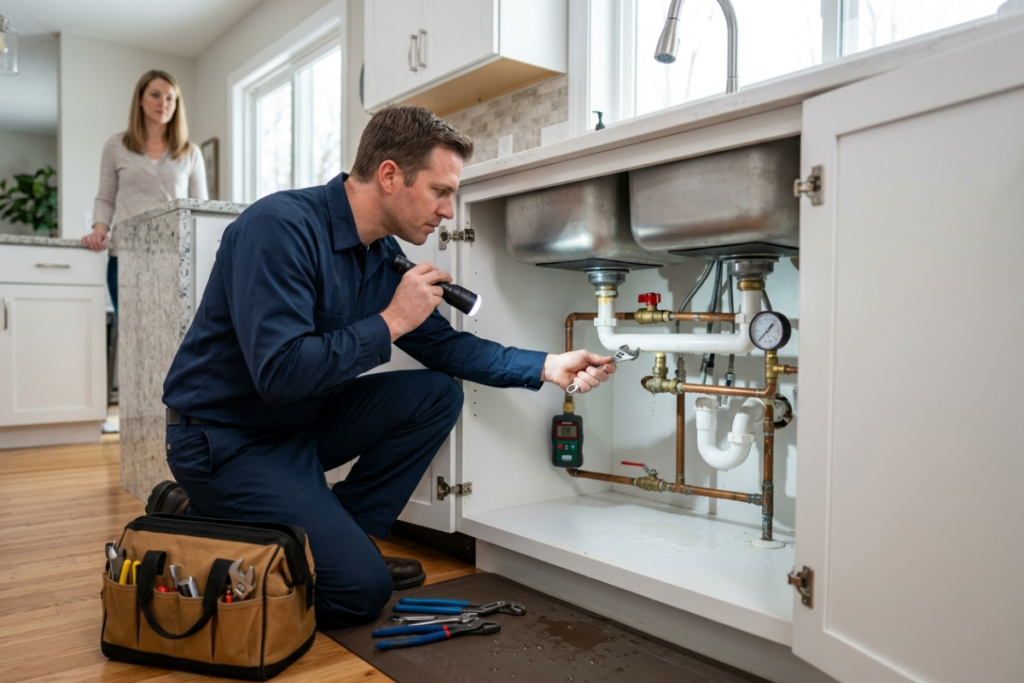
A pipe fails at two in the morning, or a drain backs up right as guests are walking through the door. In that moment, nobody’s thinking about diagnostics.
They just want someone to make it stop. Fair enough. But the part that actually protects a home happens before any wrench is turned: figuring out precisely what went wrong.
At Herdman Plumbing Heating & Cooling, those first few minutes on-site aren’t spent guessing. They’re spent gathering the details that end up shaping everything else, the diagnosis, the fix, all of it. For homeowners around Silverdale, Bremerton, Poulsbo, Port Orchard, Bainbridge Island, and the rest of Kitsap County, knowing what that first walkthrough actually looks like can take a lot of the panic out of an already stressful morning.
In this blog post, we’ll walk you through what experienced plumbers like us look for when responding to an emergency plumbing service call, why those first inspections are so important, the tools they use to perform accurate water leak detection and plumbing inspection, and how a careful diagnosis helps homeowners make informed decisions while supporting long-term water damage prevention.
Why the First Few Minutes of an Emergency Plumbing Visit Matter
Before any repair starts, a plumber is already working through three things at once:
- Is anyone in the home in danger right now
- Is the damage still actively spreading
- Where did this actually start
| Priority | Why It Matters |
| Protect the people in the home | Rules out electrical or structural hazards before work begins. |
| Stop the active water flow | Prevents flooding from spreading further |
| Locate the true source | Avoids repairing symptoms instead of the actual problem |
| Check the wider plumbing system | Confirms whether nearby fixtures or pipes were also affected |
| Recommend the right fix | Weighs repair against replacement for a lasting result |
None of this is about rushing to patch the visible mess. It’s about understanding the whole picture first, and that’s the foundation of any plumbing repair worth doing.
Finding the True Source of the Plumbing Emergency
A common mistake homeowners make, often without realizing it, is assuming the visible leak is the entire problem. It usually isn’t.
- Water dripping from a ceiling might be coming from a pipe several feet away
- A puddle near the water heater could trace back to a failing pressure relief valve rather than the tank
- A clogged kitchen sink can be a sign of something bigger further down the line
Locating the real source comes first, always. Before any plumbing repair is recommended, our plumbers check:
- Water pressure across the house
- Moisture patterns on floors and walls
- The age and condition of the pipes
- How the drains are actually performing
Quick Tip: If water turns up somewhere unexpected, don’t assume the nearest pipe is to blame. Water has a habit of traveling along framing, insulation, or subflooring long before it becomes visible.
Checking for Water Damage Before It Spreads
Stopping the leak is only half the job. The other half is figuring out how far the water has already gotten, since drywall soaks up moisture fast and flooring can start breaking down before it looks wrong to the eye.
A proper visit means checking:
- Under-sink cabinets
- Crawl spaces and basements
- Wall cavities
- Flooring around appliances
- Ceiling areas beneath upstairs plumbing
This extra step does most of the work in preventing genuine water damage, and it tends to save homeowners from a much bigger bill later.
Government Statistic: The EPA notes that the average household’s leaks can waste more than 10,000 gallons of water per year. Catching them early makes a real financial difference.
Looking Beyond the Leak: Immediate Safety Risks
Water is rarely the only thing to worry about during a plumbing emergency. Before touching any repair, our team checks for:
| Hazard | What We’re Watching For |
| Electrical components | Wiring or outlets exposed to water |
| Gas appliances | Units sitting near flooding |
| Standing water | Slip risk for anyone in the home |
| Structural areas | Early signs of moisture-related weakening |
| Wastewater | Whether a sewer backup repair has reached living spaces |
If wastewater is involved, sanitation matters just as much as fixing the drainage itself.
Identifying the Root Cause Instead of Only Fixing the Symptom
Setting a bucket under a ceiling leak and calling it done may handle the mess for now, but whatever caused the pipe to fail is still there. That’s not how we do things.
Instead, we chase down what actually caused the failure:
- Aging materials
- Corrosion
- Tree roots working their way into a line
- Water pressure is running too high
- An old installation issue
- Frozen pipes
Getting to the root cause is what separates a quick patch from an actual fix, and it’s the whole point behind a real plumbing inspection.
| What You See | What May Actually Be Happening |
| Overflowing sink | Blockage in the main drain line |
| Slow drains throughout the house | Restriction somewhere in the sewer line |
| Water stains on the ceiling | A hidden pipe leak inside the wall |
| Low water pressure | Corrosion or an unseen leak |
| Water heater leak | Internal tank failure or a worn valve |
For folks searching for plumbing repair in Silverdale, Bremerton, Port Orchard, or Poulsbo, this kind of thorough diagnostic work usually saves time and money, mostly because it solves the whole problem rather than just the part sitting in plain sight.
The Technology Behind Modern Emergency Plumbing Diagnostics
Plumbers today aren’t working with just a flashlight and a wrench. Diagnosing an emergency accurately means reaching for equipment that can see and measure what the eye can’t, and that’s what actually separates a guess from a confirmed answer.
| Tool | What It Does |
| Moisture meter | Picks up hidden dampness behind walls and under flooring |
| Drain inspection camera | Sees inside a sewer line without tearing anything up |
| Leak detection equipment | Finds concealed leaks with barely any disruption |
| Pressure gauges | Catches irregularities in the system early |
| Hand inspection tools | Checks valves, fittings, and visible piping directly |
Did You Know? Fixing easily correctable household leaks can save homeowners around 10% on their water bill, per the EPA, which makes early water leak detection worth it for more reasons than one.
Common Plumbing Emergencies and What We Typically Find
No two calls are exactly alike, but after enough years on the job, certain patterns do show up again and again. Knowing what usually causes each one helps our plumbers move faster once they’re on-site.
| Plumbing Emergency | What We Typically Find |
| Burst pipe | Freezing temperatures, aging materials, or excess pressure |
| Overflowing toilet | Drain blockage or a restriction further down the line |
| Clogged drain emergency | Grease buildup or debris that’s piled up over time |
| Water heater leak | Worn valves or a tank on its way out |
| Sudden drop in pressure | A hidden leak somewhere in the system |
If you’ve dealt with the same issue more than once, mention it. Past repairs, odd noises, and repeated backups often reveal patterns a single visit wouldn’t catch.
What Homeowners Can Do Before the Plumber Arrives
While you’re waiting, a few things are worth doing:
- Shut off the main water supply if water is actively flowing
- Close the nearby shut-off valve if it’s just one fixture
- Move furniture, rugs, and electronics away from standing water
- Snap a few photos of the damage for insurance purposes
- Keep kids and pets out of the affected area
- Skip direct contact with the water if you suspect a sewer backup
Government Statistic: FEMA notes that even a small amount of water entering a home can lead to costly repairs if it’s not dealt with quickly.
Repair vs. Replacement: How Plumbers Make the Recommendation
There’s rarely one clean answer to repair-or-replace. The call comes down to:
- How old is the component
- How many times has it already needed fixing
- The shape of the surrounding pipes is
- Whether more repairs still make financial sense
| Repair Usually Makes Sense When… | Replacement Is Often Recommended When… |
| The damage is isolated to one area | The component has reached the end of its lifespan |
| The rest of the system is in good shape | There’s a pattern of repeat failures |
| A repair offers dependable long-term performance | Ongoing repairs would likely cost more over time. |
Whether you’re looking into plumbing repair in Poulsbo, Bainbridge Island, or for professional plumbers in Port Orchard, this kind of evaluation is really about matching the recommendation to your actual home, not handing out the same answer to everyone.
Final Thoughts: Why Fast Diagnosis Is Critical During a Plumbing Emergency
Speed matters, no doubt. But it’s the accurate diagnosis that actually prevents lasting damage to a home. Tracking down the real source, checking for hidden risks, and recommending a fix based on what’s actually going on rather than a guess, that’s how Herdman Plumbing Heating & Cooling turns a stressful call into a clear plan.
If you’re dealing with a plumbing emergency or need a dependable emergency plumbing service in Bainbridge Island, Poulsbo, Port Orchard, Silverdale, Bremerton, or the surrounding areas, don’t wait around for a small issue to turn into a much bigger one.
Reach out to Herdman Plumbing Heating & Cooling today at 360-698-4147 to get prompt,
reliable service from a team that treats every call like it actually matters.