
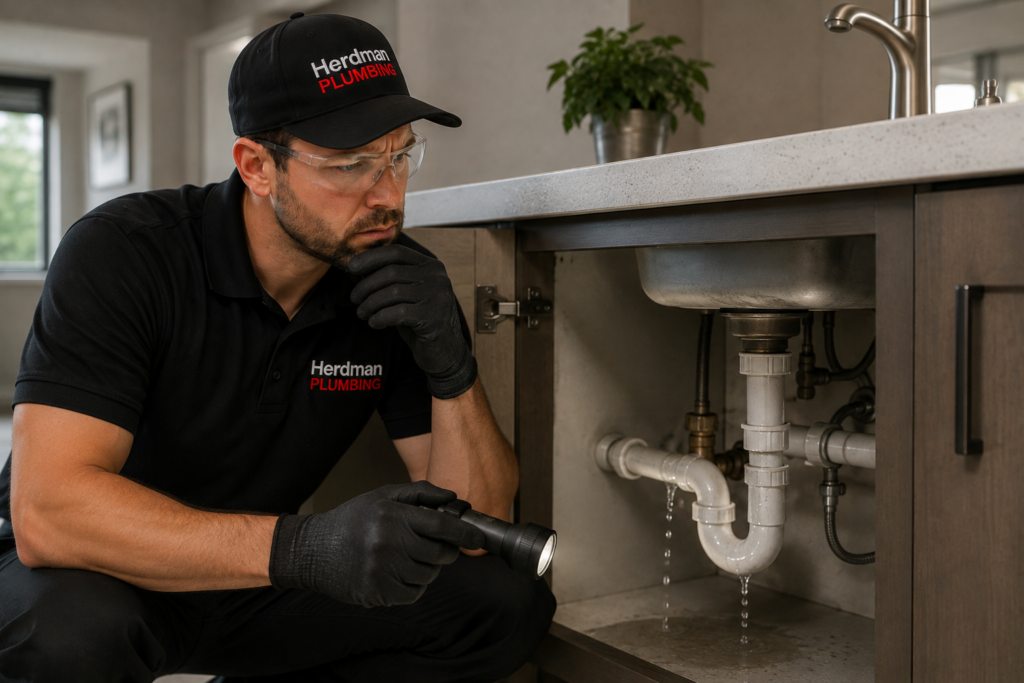
A water bill that climbs for no reason is not bad luck. It’s data, and it’s telling you that you have a particular source somewhere between your meter and your fixtures, even if that source is behind drywall, under a slab, or under your lawn. Our team at Herdman Plumbing Heating & Cooling has spent years tracing these patterns back to their source, and we can help you find yours before it becomes something much more destructive.
This blog explains how a hidden plumbing leak develops, why it rarely announces itself with a puddle, and what modern water leak detection actually involves. You’ll also learn what checks you can do yourself, when to call in a professional, and what tends to happen when a leak is left alone.
The First Thing to Do When Your Water Bill Suddenly Increases
One high bill is a data point, not a diagnosis. Before jumping to the worst-case scenario, it helps to know exactly what pattern you are looking at.
Compare Your Recent Water Bills
Compare gallons used, not just dollars charged, for your last few statements, as rate changes can distort the picture. One odd month is not the best sign of a hidden plumbing leak. A slow build-up over two or three cycles is a better sign.
Rule Out Seasonal Water Usage Changes
Lawn irrigation and house guests could explain the temporary spike. What they won’t tell you is a bill that stays high into a month with less outdoor use, which is usually a leak in an underground water line.
A family of four whose winter usage tops 12,000 gallons in a month almost always has a leak somewhere in the system, since indoor-only winter use rarely climbs that high on its own.
Hidden Plumbing Problems That Can Increase Water Bills
For most people, a leak is something dramatic. In practice, the leaks that cause the most damage are often the quietest, eating into a fitting or pipe wall for weeks before anyone notices.
Silent Toilet Leaks That Waste Hundreds of Gallons
A worn flapper valve causes water to constantly bleed from the tank to the bowl. The EPA has documented this failure wasting as much as 200 gallons a day, and because the water drains normally, there’s no pooling or sound loud enough to notice, which is why a toilet leak water bill spike so often goes unexplained.
Underground Water Line Leaks You Can’t See
Soil absorbs water far more effectively than concrete or drywall, so an underground water line leak can run for weeks before it surfaces. The most common causes are corrosion, shifting ground, and root pressure. These all tend to get worse slowly.
Dripping Faucets and Slow Leaks That Add Up Over Time
A drip that seems minor at the tap is rarely minor at the source. A single dripping faucet can waste about 3,000 gallons a year, according to data from the EPA’s WaterSense program. Copper lines can be especially prone to slow-motion failure via pinhole corrosion, in which acidic water or stray electrical current gradually eats away at the pipe wall until it perforates.
| Leak Source | Typical Cause | Annual Water Impact |
| Toilet flapper | Worn rubber seal | Up to 73,000 gallons |
| Dripping faucet | Worn washer or cartridge | Roughly 3,000 gallons |
| Copper pinhole leak | Water chemistry, electrolysis | Often undetected for months |
| Irrigation system | Broken head, cracked line | Up to 25,000 gallons |
Household Appliances That May Be Using More Water Than Expected
A cracked washing-machine hose, a dishwasher inlet valve that won’t seal, or a corroded water-heater fitting can each add measurable gallons without leaving a visible puddle. These components sit behind or beneath appliances, so moisture is often absorbed into flooring or cabinetry long before it becomes visible, making a routine plumbing inspection the only reliable way to rule them out.
Why a Leak Isn’t Always Visible
One of the most expensive mistakes in home maintenance is the notion that a leak will eventually show itself. Water is really good at hiding in building materials, and by the time you see a leak, it’s usually been leaking for a while.
Water Escaping Behind Walls
Drywall and insulation absorb moisture gradually, so a cracked joint inside a wall cavity can leak water for weeks, and the only sign of trouble may be a faint discoloration or a slightly soft spot of paint on the surface.
Leaks Beneath Floors and Foundations
Slab leak signs are subtle: a warm spot on tile, a faint mildew odor, or a hairline crack in the concrete. The slab takes in and releases moisture, so the surface clue is rarely directly over the real break.
Outdoor Irrigation Leaks That Go Unnoticed
An irrigation line broken beneath the sod can waste tens of thousands of gallons in a season, while the lawn just looks a bit greener in one spot, a sign most homeowners take as good news, not a warning.
If a leak has already reached the point of visible warping, staining, or odor, it has typically been active for weeks, not days.
Simple Checks Homeowners Can Do Before Calling a Plumber
- Run a water meter leak test: shut off every fixture, note the reading, wait two hours, and check again for movement.
- Add food coloring in the toilet tank, wait ten minutes without flushing, and see if the bowl changes color.
- Feel along exposed supply lines under sinks for dampness or a faint blue-green residue, a sign of copper corrosion.
- Compare this month’s usage to the same month last year rather than to last month alone.
When a High Water Bill Signals a Bigger Plumbing Problem
A high water bill that persists despite these checks, paired with running water sounds when every fixture is closed, or a musty smell with no obvious source, means the leak has moved past the do-it-yourself stage. It won’t resolve itself if you leave it alone. It will continue to draw water, continue to erode the surrounding material, and continue to increase your bill until the source is found and repaired.
How Professional Leak Detection Saves Money
Guesswork is expensive because you could break open a wall or slab in the wrong place, causing damage without solving the problem. Our technicians use tools that are specifically made for this diagnosis.
Acoustic and Thermal Detection Tools We Use
Ground microphones and acoustic discs pick up the sound of pressurized water escaping through concrete or metal pipe, often pinpointing a leak to within a few inches. Thermal imaging cameras are a nice complement to this process by being able to map temperature differences on floors and walls. A hot water leak will produce a warm surface plume that is invisible to the eye but obvious on an infrared display.
Tracer Gas Testing for Slab and Underground Lines
For leaks that resist acoustic and thermal methods, we introduce a safe, non-toxic tracer gas into the line. The gas escapes by the same opening as the water and rises to the surface, giving an accurate position even when water has traveled along a pipe trench before reaching daylight. This approach serves plumbing repair Port Orchard and plumbing repair Poulsbo homeowners especially well, since older slab foundations rarely show the leak point directly beneath the visible wet spot.
Preventive Maintenance That Helps Keep Water Bills Under Control
Scheduling an annual plumbing inspection, replacing worn flappers and faucet cartridges as soon as they wear, and checking irrigation lines each spring all reduce the odds of a slow leak becoming structural damage. Homeowners working with plumbers Bremerton and plumbers Silverdale trust know that a little maintenance goes a long way to prevent a little drip from becoming a costly plumbing repair.
The Real Cost of Waiting
An unexplained water bill increase is rarely a coincidence. Pinhole corrosion in copper lines, worn toilet flappers, cracked irrigation piping, and undetected underground breaks all leave the same trail of rising usage long before visible damage appears. Left unaddressed, these leaks don’t stabilize. They continue eroding pipe walls and saturating building materials, and in slab and foundation cases, they create the kind of moisture exposure that leads to mold growth within one to two days of sustained dampness.
Our team approaches every service call with the same acoustic, thermal, and tracer gas technology outlined above, because accurate water leak detection protects your home and avoids unnecessary demolition. We handle everything from a single worn flapper to a full underground line repair, bringing the same diagnostic precision to every property we serve.
If your water bill has climbed and the explanation isn’t obvious, don’t wait for a wall to warp or a floor to buckle before acting. Call Herdman Plumbing Heating & Cooling today at 360-698-4147 to schedule a leak inspection and get a clear answer before a hidden problem becomes a visible one.